
GLP-1 therapies are changing how consumers think about weight management, food intake and nutrition. For supplement manufacturers, functional-food developers and ingredient distributors, the opportunity is not to imitate prescription medicines. It is to develop evidence-based companion nutrition products that address practical nutritional needs such as protein intake, fiber, hydration, micronutrient adequacy, digestive comfort and convenient nutrient delivery.
Key Takeaways
- The strongest product-development opportunity is companion nutrition: nutrient-dense, convenient products designed around protein, fiber, hydration, micronutrients and digestive comfort.
- Evidence strength varies substantially by ingredient. Human clinical evidence should be prioritized over mechanism-only claims.
- Ingredient legality and claim compliance are market-specific. An ingredient that is acceptable in one country may require a different regulatory pathway in another.
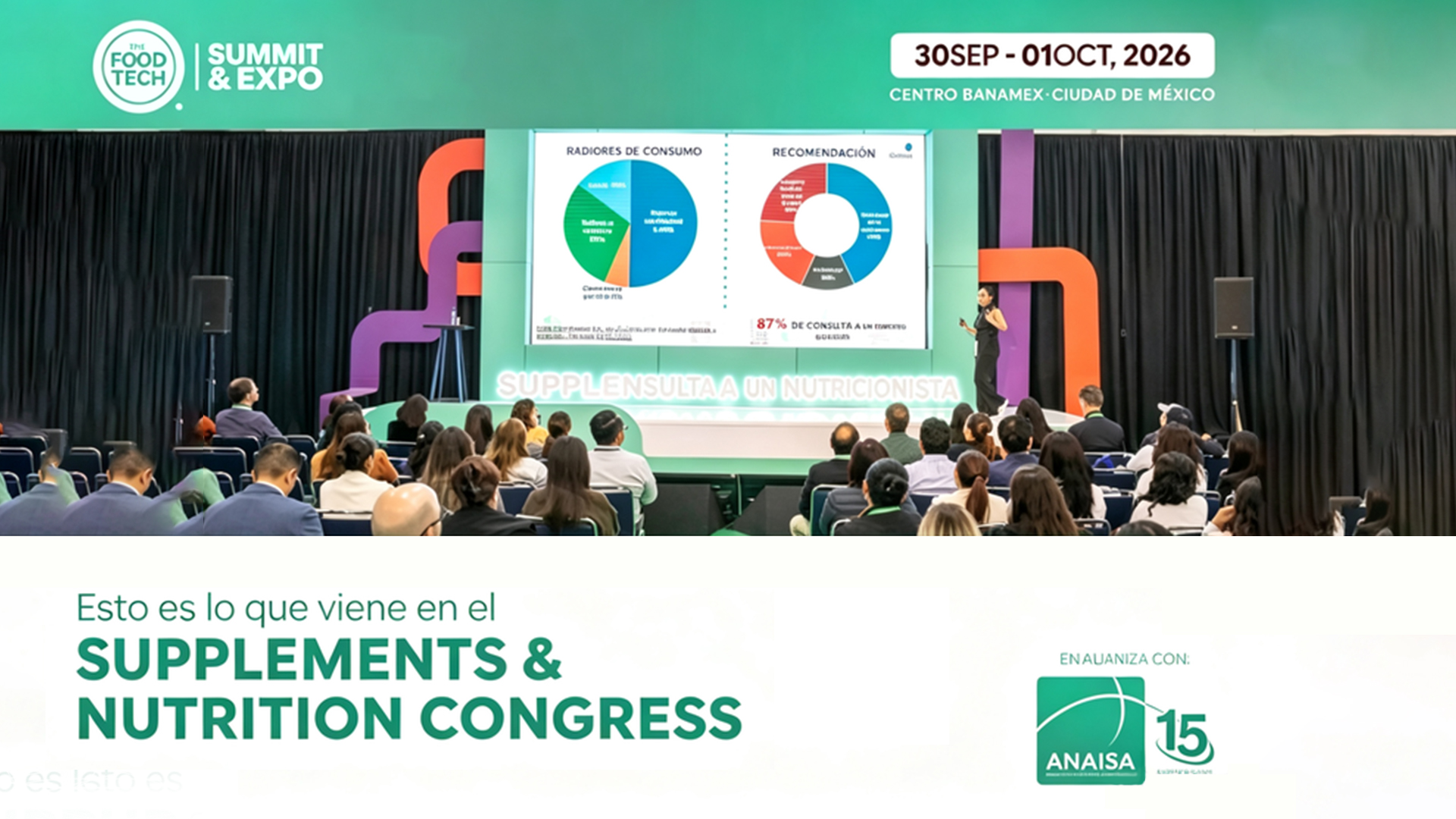
What Food Tech Summit & Expo 2026 Tells the Industry
The 17th Food Tech Summit & Expo runs September 30 – October 1, 2026 at Centro Citibanamex, Mexico City — 500+ exhibitors and 55+ free technical conferences, including a dedicated Supplements & Nutrition Congress. The organizer's editorial platform, The Food Tech, has made GLP-1 a flagship theme: its free ebook on beverage reformulation frames protein, fiber and low-glycemic ingredients as the core levers, and its article on "Functional beverages and GLP-1 consumers" explains how to capture the health-conscious market. The official invitation materials and industry news coverage around this year's show consistently point to GLP-1 as the discussion driver — from companion nutrition to beverage reformulation. Why this matters beyond the show floor: Mexico's adult obesity prevalence is an estimated 36.9%, and Latin America is the access frontier for the new oral GLP-1 wave (no cold chain, no injection barriers). For a nutritional-ingredient supplier, the show is a low-cost entry point for LATAM supply partnerships ahead of category consolidation. For manufacturers and distributors attending, the commercially safe and evidence-backed conversation is not "natural Ozempic" — it is clinically documented GLP-1 companion nutrition: ingredients with published data for satiety, glycemic support, endogenous GLP-1 support, muscle preservation and gut comfort, labeled strictly within structure/function boundaries.
GLP-1 Medicines vs. Dietary Ingredients: An Important Boundary
Semaglutide, tirzepatide and liraglutide are pharmaceutical active ingredients. They should not be presented as dietary ingredients, and a food or supplement product should not imply that it is the same as a prescription GLP-1 medicine. For the U.S. market, FDA distinguishes structure/function claims from disease claims. Structure/function claims describe the role of a nutrient or dietary ingredient in normal body structure or function, while disease claims concern diagnosis, treatment, mitigation, cure or prevention of disease. FDA also requires substantiation for applicable structure/function claims and specific notification and disclaimer requirements for dietary supplements. Accordingly, phrases such as “natural Ozempic,” “Ozempic alternative,” “treats obesity,” or “replaces GLP-1 medication” create significant regulatory risk. Even apparently neutral references to a drug can become problematic depending on the surrounding claims and presentation. FDA guidance specifically notes that context and implied disease claims matter. For international commercialization, the same principle applies: review the final product, ingredients, dosage, claims and advertising materials against the regulations of each destination market before launch.
Ingredient Categories for GLP-1 Companion Nutrition
The table below reorganizes the original ingredient list around evidence and formulation relevance. The evidence grades are an editorial framework, not an official regulatory or clinical classification: A = multiple human RCTs and/or systematic reviews; B = limited human evidence and/or strong mechanistic evidence; C = mainly preclinical evidence.
| Ingredient / category | Potential formulation role | Peer-Reviewed Evidence | B2B formulation note |
| Dietary protein (pea, soy, rice, lupine) | Protein intake and satiety-oriented formulations | A | Useful in RTD, powder and meal-replacement formats. Choose based on amino-acid profile, sensory performance and target market. |
| Psyllium husk | Viscous fiber; digestive and satiety support | B+ | Requires careful hydration and dispersion design. Start with practical serving sizes and sensory testing. |
| Beta-glucan | Viscous soluble fiber | B | Useful for beverage and powder concepts where viscosity can be controlled. |
| Glucomannan (konjac) | High-viscosity fiber and satiety-oriented formulations | B | Formulation must address dispersion, mouthfeel and adequate water intake. |
| Berberine HCl | Metabolic/glycemic-support positioning where permitted | A for glycemic evidence / B for GLP-1 link | Do not overstate GLP-1-specific evidence. Confirm destination-market status before commercialization. |
| White mulberry leaf / DNJ | Postprandial carbohydrate-management support | A for glycemic evidence | Useful in blends where carbohydrate-management positioning is permitted. |
| Yerba mate extract | Botanical formulation; caffeine-containing | B | Caffeine content, dosage and labeling require market-specific review. |
| Pasteurized Akkermansia muciniphila | Postbiotic / microbiome-oriented formulations | B and still developing | Regulatory status is strain- and market-specific; verify before quotation. |
| Hop extract | Satiety-oriented botanical with published human studies (see supplier dossier) | A (human studies; verify via dossier) | Proprietary ingredient; confirm trademark, license and supply authorization before use. |
| Creatine monohydrate | Lean-mass and performance support, particularly with resistance training | A for broader sports-nutrition evidence | Strong fit for powder, capsule and stick-pack concepts; position around documented nutrition/performance use rather than GLP-1 drug equivalence. |
What the Evidence Says About “GLP-1 Support” Ingredients
A key improvement over generic “GLP-1 booster” content is to separate a biological mechanism from a demonstrated human outcome. An ingredient may influence GLP-1 in a cell or animal model without producing a clinically meaningful change in body weight or another human outcome. Product claims should therefore follow the strongest human evidence available.
Hop Extract
Published human studies report changes in hunger, cravings, calorie intake and GLP-1-related measures. Because this is a proprietary ingredient, manufacturers should obtain the current supplier dossier and confirm the exact study population, dose, endpoints and permitted claims before using the results commercially.
Berberine
Published human trials provide substantial evidence for berberine's glycemic outcomes, while evidence for GLP-1-specific effects remains mixed. The more defensible approach is to separate berberine’s broader evidence base from the still-developing GLP-1 mechanism rather than calling it a proven GLP-1 ingredient.
Dietary Fibers
Psyllium, beta-glucan and glucomannan have more practical formulation relevance than many “GLP-1 booster” botanicals because they can contribute to fiber intake and satiety-oriented product design. However, viscosity, gastrointestinal tolerance and serving size must be considered.
Plant proteins
Protein is highly relevant to companion nutrition because a smaller food intake can make protein density more important. Pea, soy, rice and other proteins can be used according to target consumer, allergen and sensory requirements.
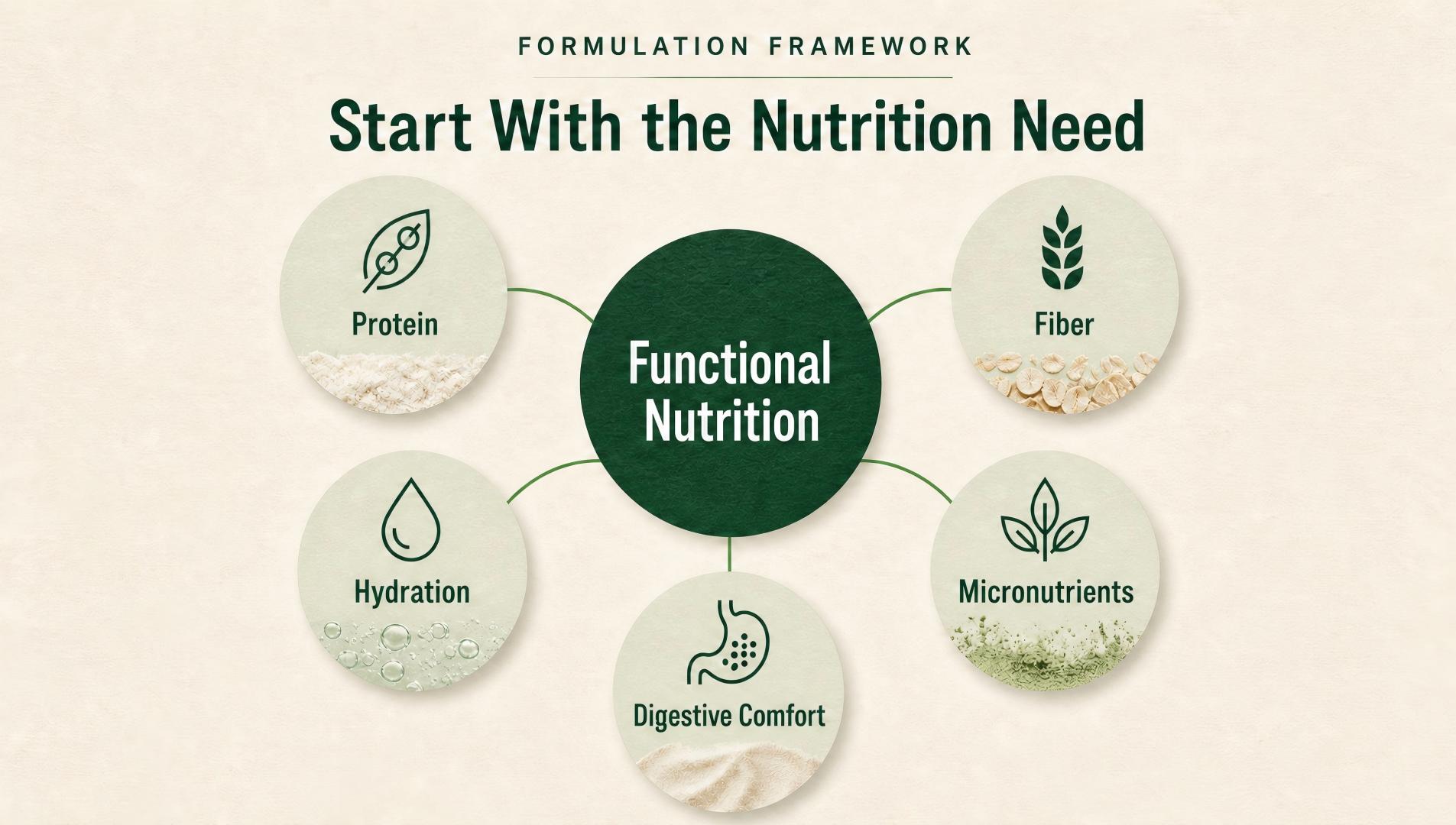
GLP-1 Companion Nutrition: The Main Formulation Needs
Rather than building one product around a long list of ingredients, manufacturers can organize product development around a specific nutrition need.
| Product need | Ingredient directions | Practical formats | Key development questions |
| Protein and lean-mass support | Pea/soy/rice protein; creatine; HMB where appropriate | RTD, powder, stick pack, capsule | Protein per serving, amino-acid profile, solubility, taste, training-positioning and serving volume |
| Fiber and digestive support | Psyllium, beta-glucan, glucomannan, methylcellulose | Powder, stick pack, selected beverages | Viscosity, GI tolerance, dispersion, water instructions and flavor masking |
| Hydration and micronutrient delivery | Sodium, potassium, magnesium, selected B vitamins | Effervescent tablet, sachet, RTD/electrolyte drink | Electrolyte levels, taste, osmolality, regulatory limits and target use occasion |
| Digestive comfort | Ginger and selected digestive-support ingredients | Capsule, chewable, powder, beverage | Evidence for intended use, dose, sensory profile and market-specific claims |
| Nutrient-dense meal support | Protein + fiber + micronutrient blend | Meal replacement, shake, powder | Nutrient density, calorie level, protein quality, texture and consumer adherence |
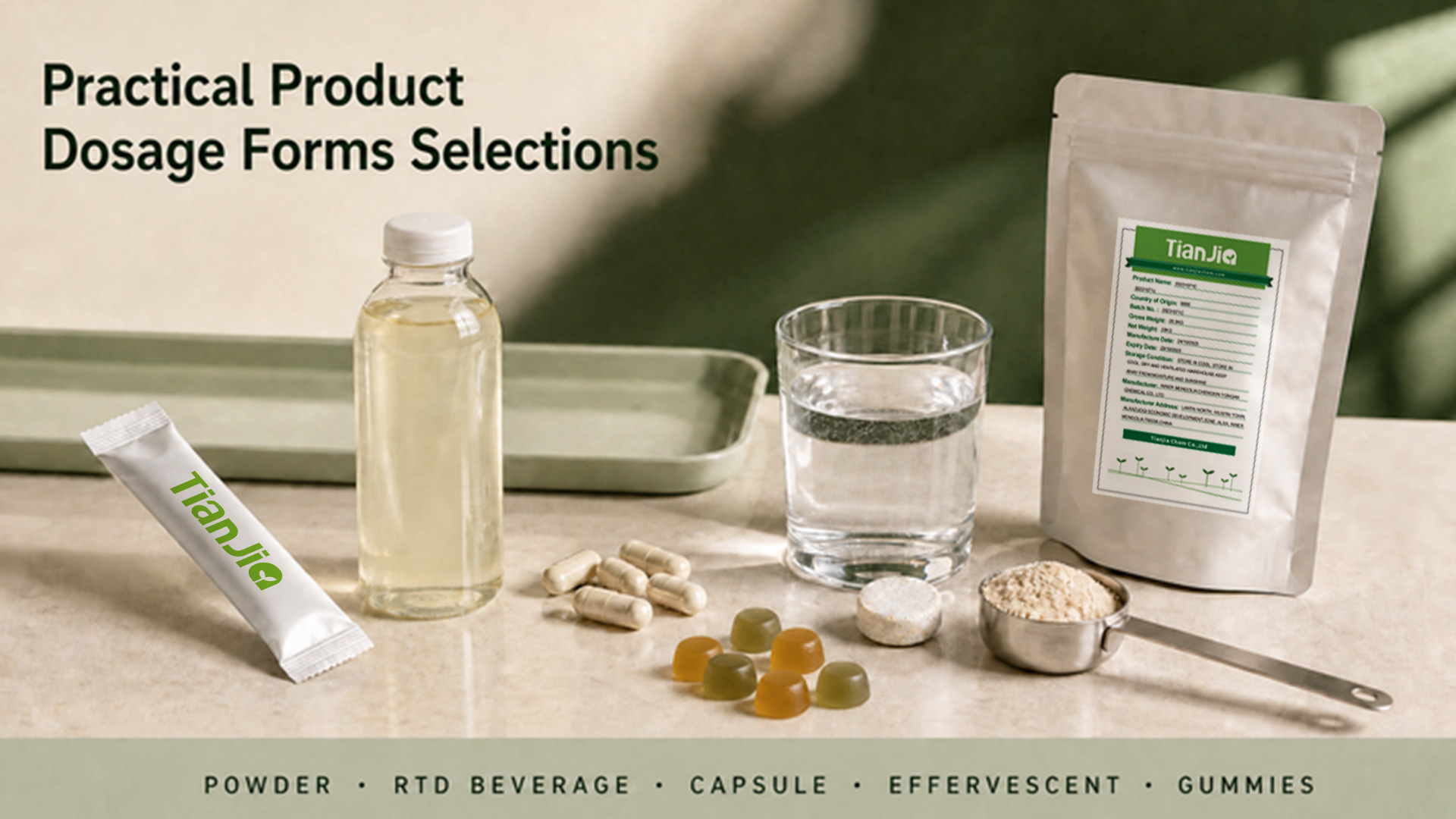
Practical Product Formats for Manufacturers
Stick-pack powders
A strong format for fiber, protein and electrolyte concepts. It supports controlled serving sizes and convenient distribution, but fiber and protein levels can create viscosity and flavor challenges.
RTD protein and functional beverages
Useful when the product needs to deliver nutrition in a small, ready-to-consume serving. Clear-protein and electrolyte formats may be relevant where sensory performance and low volume are priorities.
Capsules
Appropriate for concentrated ingredients such as creatine, HMB, selected botanicals or probiotics. Capsule capacity limits the amount of protein or fiber that can be delivered.
Gummies
Consumer-friendly for selected micronutrients and lower-dose botanicals. Gummies are generally less suitable for delivering meaningful protein or high fiber doses.
Effervescent products
Useful for hydration and micronutrient concepts. Formulation should consider mineral taste, acid-base balance, stability and packaging moisture control.
Meal-replacement formats
Can combine protein, fiber and selected micronutrients in one serving. These products require careful nutritional, sensory and regulatory review.
GLP-1 “Before and After”: What Manufacturers Should Learn From the Data
Searches for “GLP-1 before and after” often focus on visible weight change. For product developers, a more useful question is what nutritional considerations may accompany a period of reduced food intake or weight loss.
- Weight loss can include both fat mass and lean mass. Protein intake and resistance training are therefore important considerations in many weight-management nutrition strategies.
- Weight regain after discontinuation of GLP-1 therapy has been reported in clinical literature. This supports interest in long-term nutrition habits rather than a short-term “before and after” product promise.
- Reduced food intake may make nutrient density more important. Protein, fiber, electrolytes and selected micronutrients can therefore be relevant formulation areas.
- These observations do not mean every GLP-1 user has a deficiency or that every user needs the same supplement. Product development should be based on defined consumer needs, appropriate serving sizes and evidence.
Peer-reviewed clinical literature documents weight regain after discontinuation of GLP-1 therapy. Manufacturers should review the original papers rather than relying only on secondary summaries when developing claims.
Functional Beverages and GLP-1-Aware Product Development
Functional beverages are a practical area for companion nutrition because they can combine hydration, protein, fiber or selected micronutrients in a convenient serving. The Food Tech Summit & Expo 2026 is explicitly positioned around ingredients, functional food solutions and product development, with a Supplements & Nutrition Congress and more than 55 free technical conferences.
- Protein-first RTD: use a meaningful protein dose with a small, convenient serving and a sensory system designed for frequent use.
- Electrolyte hydration: focus on clear nutritional purpose and palatability rather than suggesting that the beverage treats medication side effects.
- Fiber-fortified beverages: psyllium, beta-glucan and other fibers can support fiber delivery, but viscosity and GI tolerance must be solved at the formulation stage.
- Botanical beverages: caffeine-containing ingredients such as yerba mate require accurate caffeine declaration and market-specific review.
- Low-sugar formats: sweetener, flavor and mouthfeel systems should be designed together, especially when protein, minerals or fibers introduce bitterness or astringency.
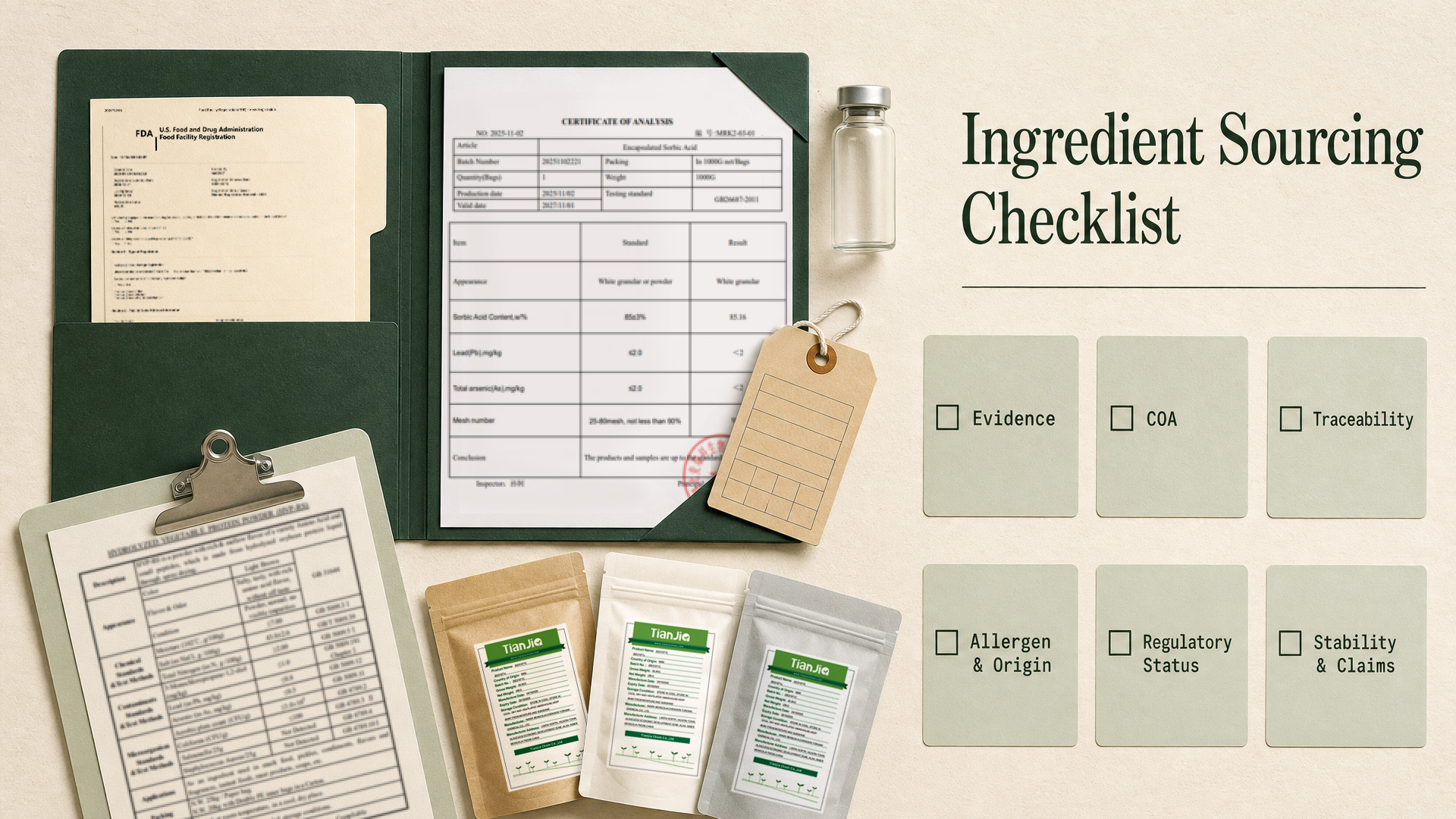
Ingredient Sourcing Checklist for Distributors and Manufacturers
Human evidence dossier: request the original RCTs, systematic reviews and study details behind any proposed claim.
Specification and COA: verify identity, assay, microbiological limits, heavy metals and other parameters appropriate to the ingredient.
Traceability: confirm manufacturer, production site, batch traceability and change-control procedures.
Allergen and origin information: especially important for protein, collagen, dairy-derived and other allergen-relevant materials.
Regulatory status by destination: review each ingredient and final formulation for the intended country or region. Do not assume that “food grade” means universally permitted.
Proprietary ingredients: confirm trademark ownership, authorized distributors and licensing requirements.
Stability and formulation data: request data relevant to the finished format, not only the raw powder.
Claim support: ask suppliers to distinguish mechanism, human clinical outcomes and approved/appropriate commercial wording.
How Tianjia Can Support B2B Product Development
For manufacturers and distributors, ingredient selection is only one part of a successful product. A useful supplier should help connect ingredient quality, formulation format, documentation and destination-market requirements.
For GLP-1 companion nutrition projects, Tianjia can position its support around evidence-led ingredient sourcing and formulation development across powders, capsules, gummies, effervescent products and RTD concepts. Specific ingredient availability, documentation and regulatory suitability should be confirmed for each project and destination market.
If you are developing a GLP-1 companion nutrition product, contact the Tianjia team to discuss ingredient sourcing, specifications, formulation requirements and samples.
It is a product-development approach focused on nutritional needs that may be relevant during weight-management therapy, such as convenient protein, fiber, hydration, micronutrients and digestive comfort.
Powders, stick packs, RTD beverages, capsules, effervescent products, gummies and meal-replacement formats can all be considered. The best format depends on dose, sensory requirements and the nutritional objective.
No. Compliance depends on the exact wording, context, ingredient, product category, market and substantiation. FDA guidance makes clear that implied disease claims and claims suggesting substitution for or augmentation of drug therapy can create regulatory issues.
Yes, we provide nutritional supplements forms customizations, the forms we provide for your choices including: Powder, Tablets, RTD Drinks, Gummies, Capsules, etc. based on your requirements
Post time: Sep-01-2026