
Introduction: Why Creatine and HMB Matter for Aging Muscles
The most debilitating characteristic of the aging process is the progressive decline in skeletal muscle mass and function, a condition clinically known as sarcopenia. As the global population ages, finding effective interventions has never been more urgent. A growing body of clinical evidence now points to a powerful creatine HMB supplement combination as one of the most promising nutritional strategies available.
With advancing age, multiple factors converge to accelerate muscle loss: reduced protein synthesis efficiency, anabolic resistance, and chronic low-grade inflammation (inflammaging). The net result is that muscle protein breakdown exceeds synthesis, leading to falls, fractures, and loss of independence. While resistance training remains the cornerstone intervention, real-world compliance is often poor, making targeted medical nutritional therapy an indispensable complementary strategy.
Among the numerous nutritional supplements studied in recent years, the combined use of creatine monohydrate and HMB (specifically HMB-CA, the calcium salt form of beta-hydroxy-beta-methylbutyrate) has emerged as a focal point in clinical nutrition research. This creatine HMB combination works through complementary, synergistic mechanisms that address both the energy and structural demands of aging muscle tissue.
How Creatine Monohydrate and HMB Work Together: Dual-Mechanism Synergy
Unlike supplements that compete for the same physiological pathways, creatine and HMB operate through completely independent mechanisms, producing a true synergistic effect. Understanding this dual-target approach is key to appreciating why a creatine HMB supplement outperforms either compound alone.
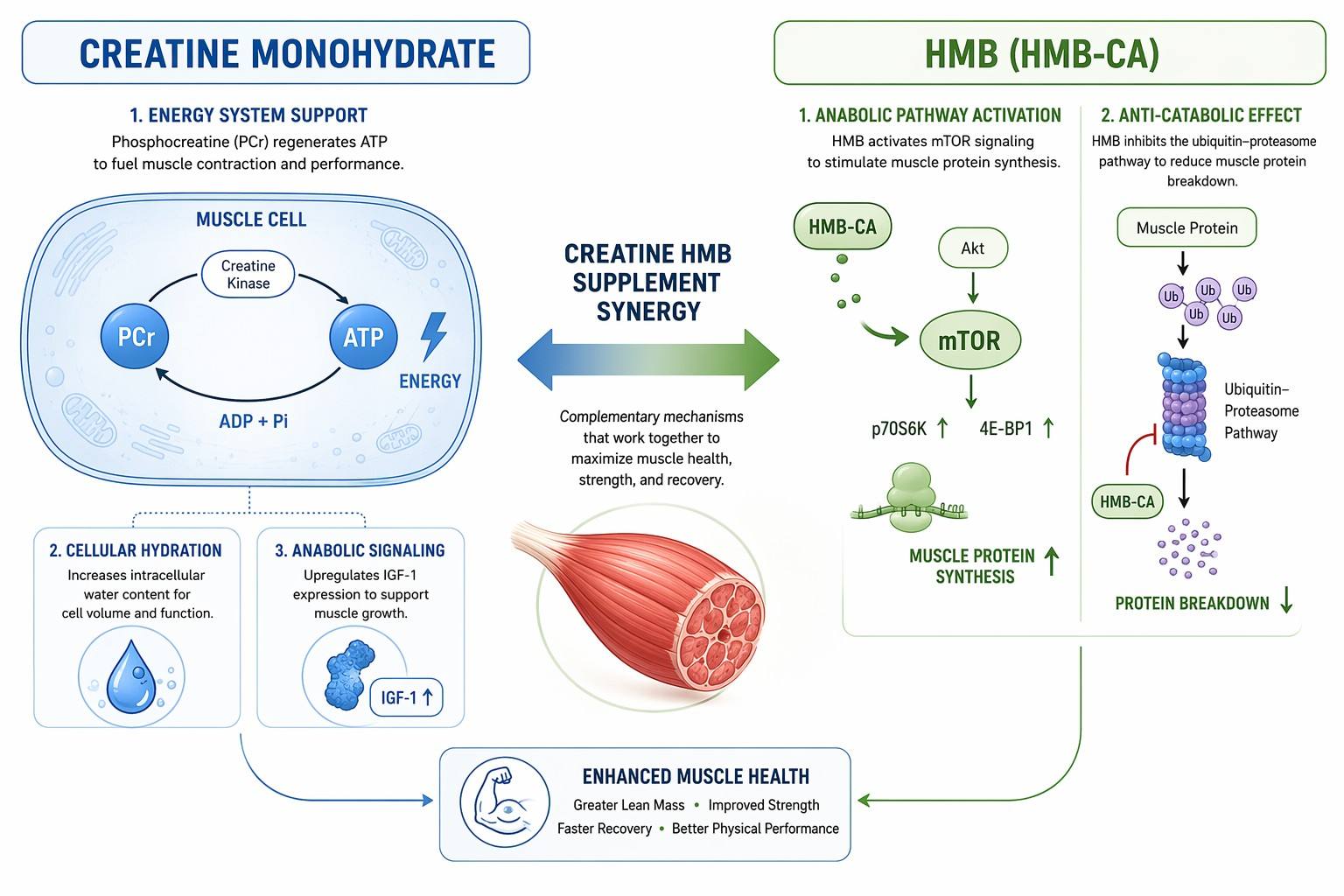
Figure 1: Creatine Monohydrate and HMB (HMB-CA) work through complementary, independent mechanisms — Creatine supports ATP energy regeneration and cellular hydration, while HMB activates mTOR for protein synthesis and inhibits muscle protein breakdown.
Creatine Monohydrate: Cellular Energy and Anabolic Amplification
Phosphagen System Resynthesis. Phosphocreatine (PCr) in skeletal muscle serves as the primary energy donor for high-intensity, short-duration activities. Creatine monohydrate supplementation significantly increases intramuscular creatine and phosphocreatine stores, accelerating adenosine triphosphate (ATP) regeneration. This enables skeletal muscle to withstand higher training loads and volumes during resistance exercise, a critical factor for older adults seeking to rebuild lost strength.
Cellular Hydration and Anabolic Signaling. Creatine functions as an osmolyte, drawing water into muscle cells. This state of cellular hydration (cell swelling) is far more than a cosmetic effect; it directly stimulates muscle fibers to generate mechanical signals that activate skeletal muscle satellite cells and promote expression of anabolic factors such as insulin-like growth factor-1 (IGF-1). This creates a pro-anabolic cellular environment primed for muscle protein synthesis.
HMB (HMB-CA): Dual-Direction Protein Homeostasis Regulation
Initiation of Synthesis via mTOR Pathway. As an active metabolite of the essential amino acid leucine, HMB potently activates the mammalian target of rapamycin (mTOR) signaling pathway. This directly regulates downstream translational initiation proteins to trigger muscle protein synthesis (MPS). HMB-CA (the calcium salt form) offers superior stability and bioavailability compared to free-acid HMB.
Inhibition of Catabolism (Ubiquitin-Proteasome Pathway). Chronic low-grade inflammation, highly prevalent in aging populations, readily activates the ubiquitin-proteasome pathway, driving excessive muscle protein breakdown. HMB directly blocks this degradation pathway, serving as a powerful muscle-protective defense mechanism during bed rest, disability, or states of high metabolic demand, precisely the scenarios where older adults are most vulnerable to rapid muscle wasting.
Clinical Research: What the Evidence Says About Creatine HMB Supplementation
Over the past decade, clinical double-blind, randomized controlled trials (RCTs) have evolved from simply measuring muscle mass to exploring muscle strength and functional performance, outcomes that directly impact quality of life. The creatine HMB combination consistently demonstrates benefits that exceed those of either supplement alone.
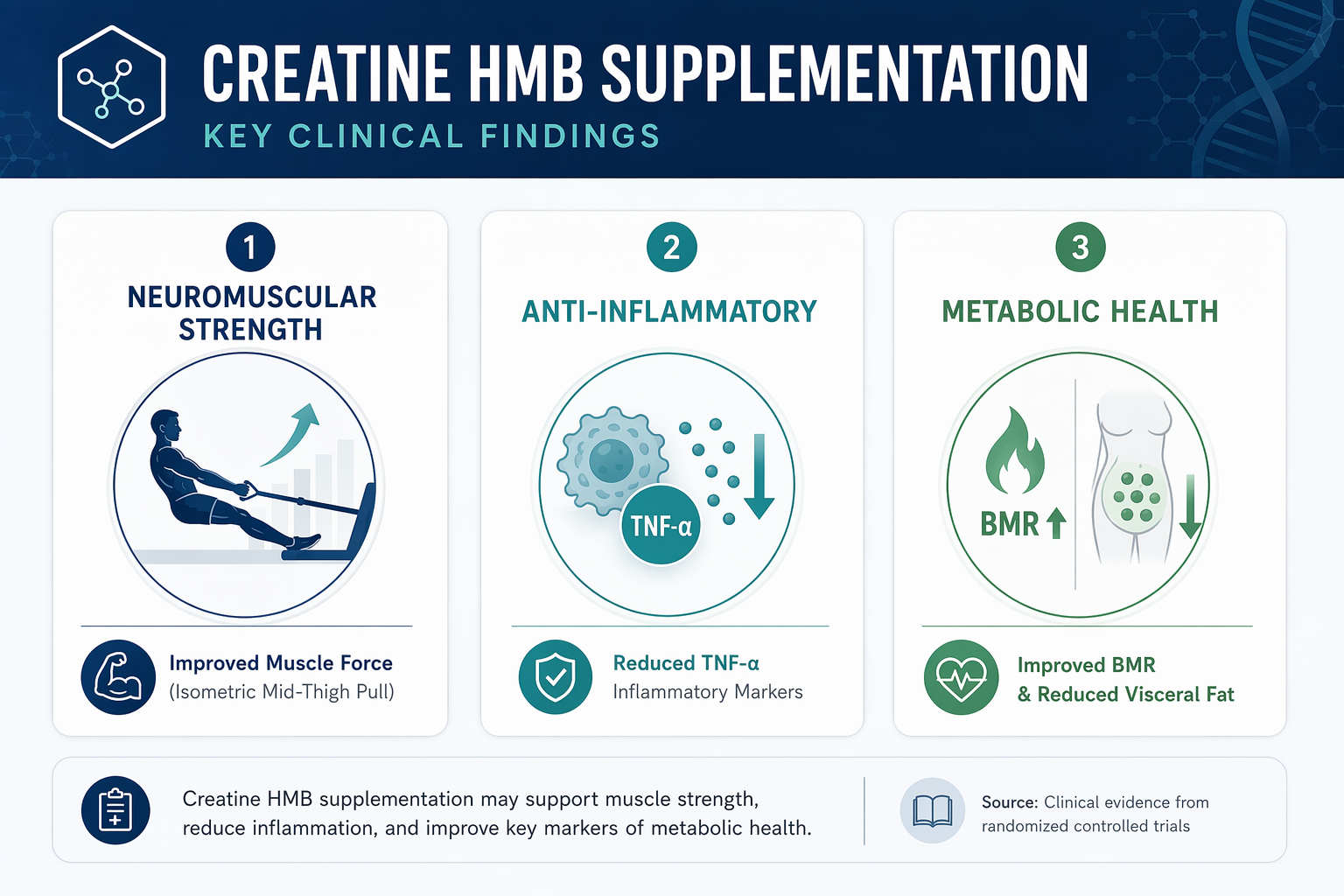
Figure 2: Key clinical findings — creatine HMB supplementation enhances neuromuscular strength, reduces systemic inflammation (TNF-alpha), and improves metabolic health markers including BMR and visceral fat reduction.
1. Neuromuscular Strength Gains: More Power Per Muscle Fiber
Multiple recent clinical studies, including a landmark crossover-design RCT published in GeroScience (PubMed-indexed), have demonstrated that elderly participants receiving a creatine HMB intervention (3 g/day of each, combined with systematic resistance training) exhibited significant functional strength and muscular endurance improvements. Remarkably, in the early stages, these gains were independent of measurable muscle mass hypertrophy.
Key findings from the creatine HMB group versus placebo:
- Significantly higher isometric lower-limb pull strength (Isometric Mid-Thigh Pull)
- Superior arm flexion-extension endurance (number of biceps curls completed in 30 seconds)
- Enhanced core stability and trunk control
Mechanism Insight: Researchers concluded that this muscle mass-independent strength gain indicates that the combined creatine HMB supplementation improves neuromuscular recruitment capacity and muscle quality (actin functional density). In practical terms, existing muscle fibers simply produce more force per unit, a finding with profound implications for frail older adults who may struggle to build significant new muscle mass.
2. Metabolic Health and Systemic Anti-Inflammatory Remodeling
A recent multi-component RCT (see ClinicalTrials.gov registration and associated PubMed publications) incorporated creatine and HMB into an Integrated Physical Conditioning (IPC) program for older adults and observed systemic benefits beyond muscle alone:
Inflammatory Marker Reduction. Twelve weeks of creatine HMB supplementation led to significant reductions in pro-inflammatory cytokines, including tumor necrosis factor-alpha (TNF-alpha) and weak inducers of apoptosis (TWEAK) in sarcopenic patients. This demonstrates that the nutritional intervention successfully mitigates the extracellular resistance that impairs muscle protein synthesis in an inflamed aging environment.
Body Composition and Cardiovascular Remodeling. Compared to the exercise-only control group, the combined creatine HMB nutrition group demonstrated:
- Improved daily functional mobility (five-sit-to-stand test, gait speed)
- Significantly increased basal metabolic rate (BMR)
- Reduced visceral fat accumulation
- Decreased diastolic blood pressure in female participants
- Improved expiratory muscle strength
How to Take Creatine and HMB: Evidence-Based Supplementation Protocol
Based on RCT evidence from the past decade, the following standardized creatine HMB supplement protocol has been developed for older adults in community and institutional care settings who are at risk of or diagnosed with sarcopenia.
Core Dosage and Formulation Standards
|
Supplement |
Daily Dosage |
Key Notes |
|
Creatine Monohydrate |
3-5 grams |
No loading phase needed for older adults; proceed directly to maintenance dose to avoid GI discomfort |
|
HMB (as HMB-CA) |
3 grams |
Calcium salt form (HMB-CA) preferred for stability and absorption |
|
Protein Co-ingestion |
1.0-1.2 g/kg body weight |
High-quality protein (whey recommended) with ample water; carbohydrates enhance creatine uptake via insulin pathway |
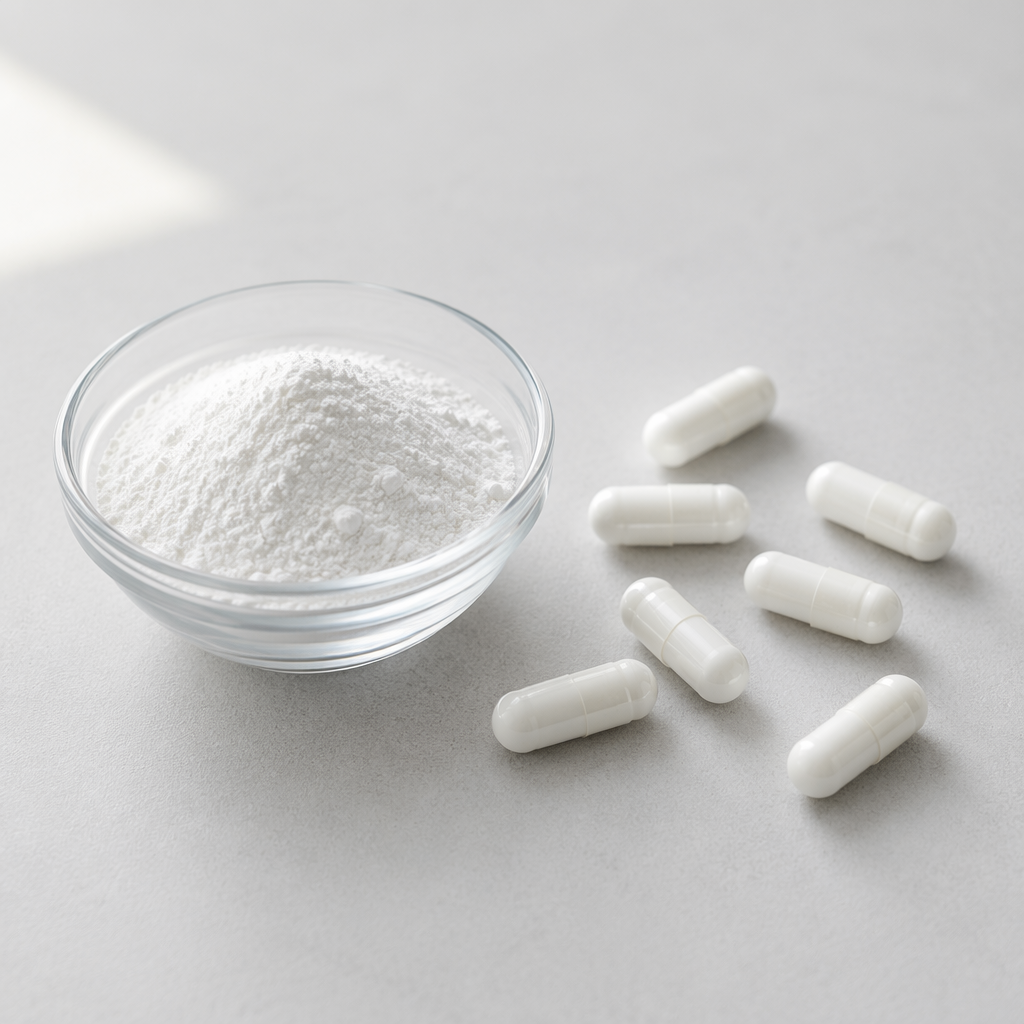
Figure 3: Creatine monohydrate (fine white powder) and HMB-CA capsules — the two clinically validated ingredients of a creatine HMB supplement protocol.
Daily Creatine HMB Supplement Schedule (Clinical Model)
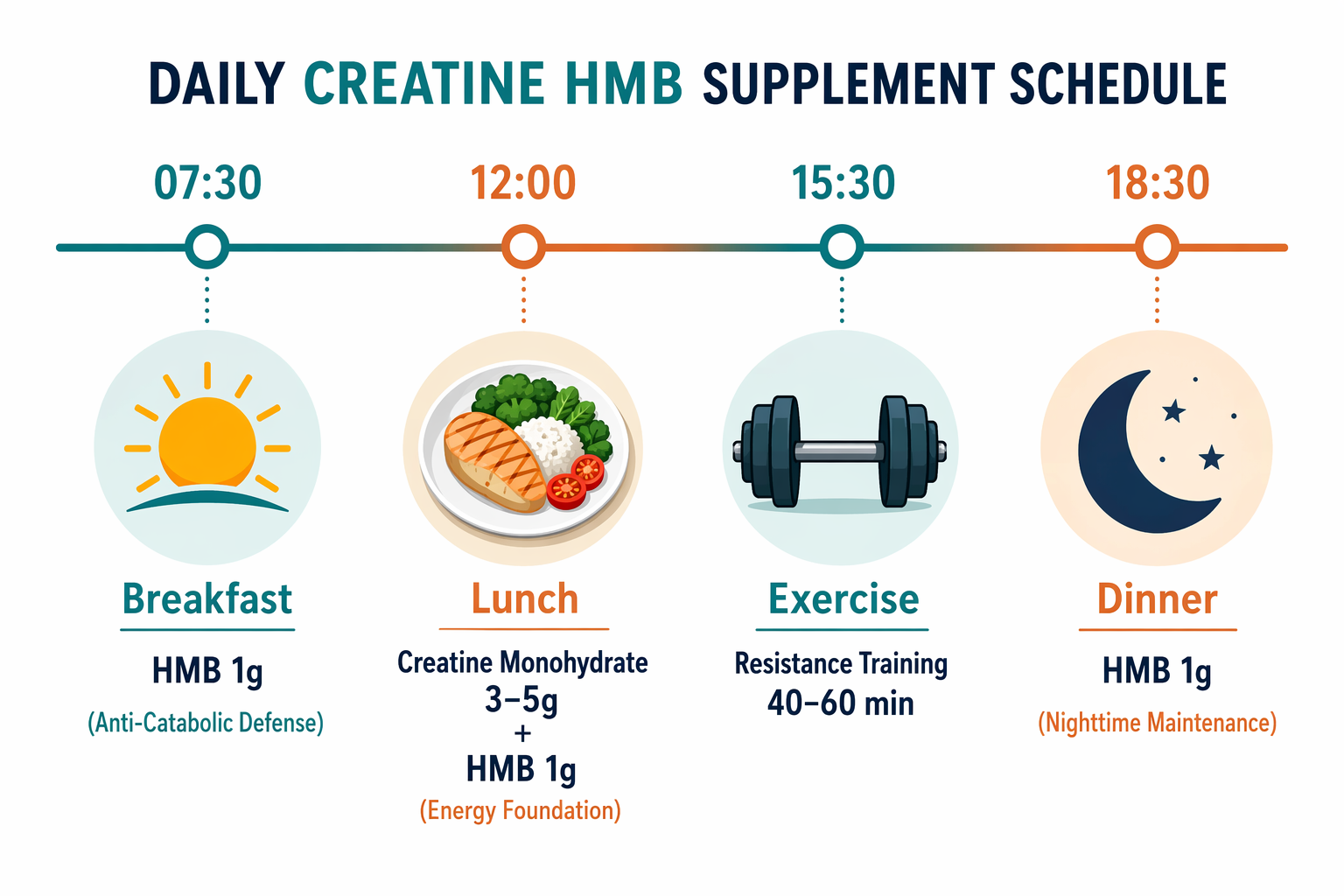
Figure 4: Evidence-based daily creatine HMB supplement schedule — HMB is taken across three meals for 24-hour anti-catabolic coverage, while creatine monohydrate is taken with lunch to fuel afternoon activity and training.
Breakfast (07:30-08:30): Anti-Catabolic Defense
Take 1 gram of HMB (HMB-CA) with breakfast to counteract the elevated muscle protein catabolism resulting from prolonged overnight fasting.
Lunch / Pre-Workout (12:00-13:00): Energy and Anabolic Foundation
Take 1 gram of HMB plus 3-5 grams of creatine monohydrate (dissolved in warm milk, water, or juice) with lunch. This provides adequate phosphagen energy reserves for afternoon resistance training or daily activities.
Afternoon Exercise (15:30-16:30): Multi-Component Training (Recommended)
Schedule 2-3 resistance training sessions per week, 40-60 minutes each. Combine resistance strength exercises (resistance band split squats, dumbbell presses) with balance and agility drills (single-leg stands, tandem walking). This multi-component approach maximizes the anabolic conversion rate of your creatine HMB supplementation.
Dinner (18:30-19:30): Nighttime Maintenance
Take 1 gram of HMB with dinner to ensure continuous mTOR pathway activation and stable blood HMB concentrations throughout the 24-hour cycle, supporting overnight muscle repair and preservation.
Safety, Side Effects and Clinical Monitoring
Long-term RCTs with follow-up periods extending up to five years have consistently demonstrated that creatine monohydrate and HMB-CA supplementation at the recommended doses poses no toxic risk to hepatic or renal function in healthy older adults and those with normal renal function (as assessed by estimated glomerular filtration rate, eGFR).
Managing Mild Side Effects. A small subset of users may experience transient muscle water retention (0.5-1 kg weight gain) or mild gastrointestinal bloating during the initial phase. These symptoms are typically self-limiting and resolve by reducing creatine monohydrate intake to 2-3 grams per day and taking the supplement in divided doses with meals.
Clinical Contraindications. Patients with severe end-stage kidney disease (CKD Stages 4-5), advanced liver disease, or significant metabolic disorders should undergo comprehensive evaluation by a physician or clinical nutritionist before initiating any creatine HMB supplement regimen.
Conclusion: Creatine HMB, A New Standard in Anti-Aging Nutrition
The past decade of evidence-based clinical research has firmly established that the creatine HMB supplement combination is no longer the exclusive domain of elite athletes. It has emerged as a powerful, clinically validated medical nutritional tool for combating age-related muscle decline and sarcopenia. Through a dual-pronged mechanism, creatine monohydrate regenerates cellular energy via the phosphagen system while HMB simultaneously stimulates protein synthesis via mTOR and blocks proteasome-mediated muscle breakdown; this creatine and HMB combination addresses both sides of the muscle protein balance equation.
For older adults, the clinical benefits extend far beyond body composition metrics: enhanced neuromuscular function reduces fall risk, improved metabolic health preserves independence, and maintained muscle strength protects dignity in daily living. As global populations continue to age, the creatine HMB supplement paradigm deserves accelerated adoption at both clinical and community levels.
References
1. Kreider RB, Kalman DS, Antonio J, et al. International Society of Sports Nutrition position stand: Safety and efficacy of creatine supplementation in exercise, sport, and medicine. Journal of the International Society of Sports Nutrition. 2017;14:18. https://pubmed.ncbi.nlm.nih.gov/28615996/
2. Wilson JM, Fitschen PJ, Campbell B, et al. International Society of Sports Nutrition Position Stand: Beta-hydroxy-beta-methylbutyrate (HMB). Journal of the International Society of Sports Nutrition. 2013;10(1):6. https://pubmed.ncbi.nlm.nih.gov/23374455/
3. Wilkinson DJ, Hossain T, Hill DS, et al. Effects of leucine and its metabolite β-hydroxy-β-methylbutyrate on human skeletal muscle protein metabolism. The Journal of Physiology. 2013;591(11):2911-2923. https://pubmed.ncbi.nlm.nih.gov/23551944/
4. Candow DG, Ostojic SM, Chilibeck PD, et al. Creatine monohydrate supplementation for older adults and clinical populations. Journal of the International Society of Sports Nutrition. 2025;22(sup1):2534130. https://pubmed.ncbi.nlm.nih.gov/40673730/
5. Ramos-Hernández R, Miguel-Ortega Á, Martínez-Ferrán M, et al. Combined creatine and HMB co-supplementation improves functional strength independent of muscle mass in physically active older adults: A randomized crossover trial. GeroScience. 2026;48(3):4457-4475. https://pubmed.ncbi.nlm.nih.gov/41073834/
6. Ramos-Hernández R, Busto N, Miguel-Ortega Á, et al. Combined creatine and β-hydroxy-β-methylbutyrate supplementation with integral conditioning exercise enhances functional performance and metabolic health in physically active older adults: A randomized controlled crossover trial. Aging Clinical and Experimental Research. 2026;38(1):44. https://pubmed.ncbi.nlm.nih.gov/41511610/
7. Ostojic SM, Prémusz V, Ács P. Creatine and cellular senescence: From molecular pathways to populational health. Experimental Gerontology. 2025;207:112798. https://pubmed.ncbi.nlm.nih.gov/40456458/
The optimal creatine HMB supplement for anti-aging purposes combines 3-5 grams of creatine monohydrate with 3 grams of HMB-CA (calcium salt) daily, ideally co-ingested with high-quality protein. Look for products that provide pharmaceutical-grade creatine monohydrate and HMB-CA without unnecessary fillers or proprietary blends that obscure actual dosage.
Clinical studies report measurable improvements in muscle strength and functional performance within 8-12 weeks of consistent creatine HMB supplementation combined with resistance training. Some neuromuscular adaptations (improved muscle recruitment efficiency) may appear earlier, within 4-6 weeks.
Yes. Creatine monohydrate and HMB (HMB-CA) can be taken together without any negative interaction. Research demonstrates that simultaneous ingestion does not impair absorption of either compound. In fact, taking them together with a meal containing carbohydrates may enhance creatine uptake into skeletal muscle via insulin-mediated transport.
HMB-CA (calcium beta-hydroxy-beta-methylbutyrate) is the most studied and clinically validated form of HMB. It offers superior chemical stability, longer shelf life, and better gastrointestinal tolerability compared to free-acid HMB. Virtually all major clinical trials on HMB for sarcopenia have used the HMB-CA form.
Creatine monohydrate does promote intracellular water retention within muscle cells; this is actually a desired effect that contributes to anabolic signaling and muscle protein synthesis. Subcutaneous water retention (visible bloating) is uncommon at the 3-5 gram maintenance dose. If mild bloating occurs, reduce to 2-3 grams and divide doses across meals.
Individuals with Stage 4-5 chronic kidney disease, severe liver impairment, or those on nephrotoxic medications should consult their healthcare provider before starting creatine HMB supplementation. Pregnant or breastfeeding women should also seek medical advice due to limited safety data in these populations.
Post time: Jul-24-2026